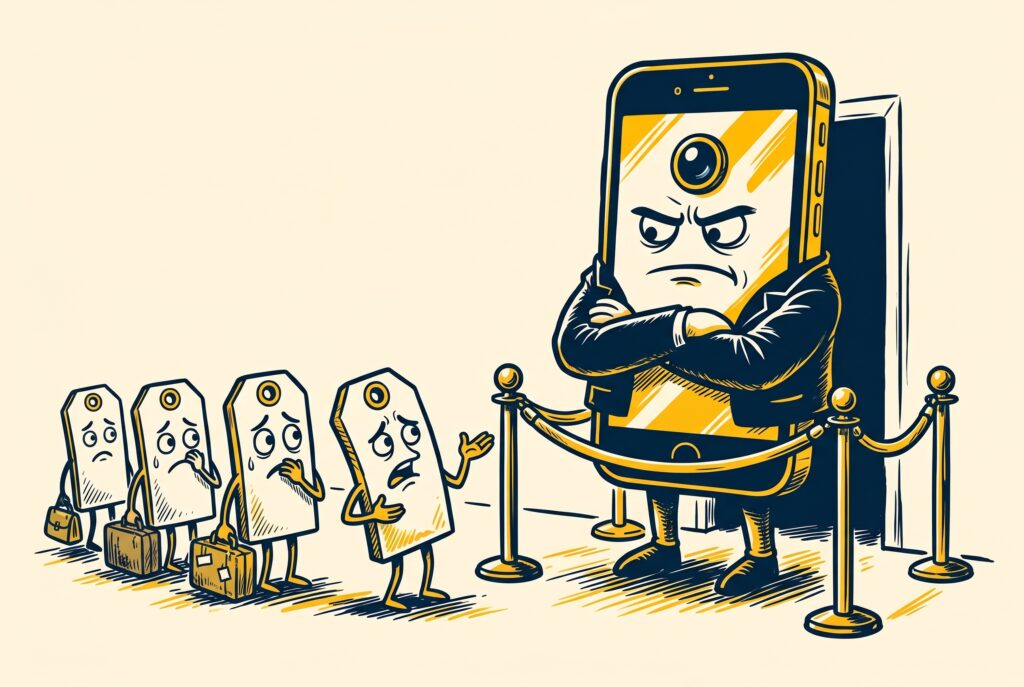
Apple shipped iOS 27 on September 14, and with it came a change most media plans still haven’t absorbed: the iOS 27 Safari blocklist. Safari now refuses to load requests to a short list of named ad tech and identity domains. If your clients reach iPhone users, and nearly all of them do, some of the ad calls, ID syncs and tags you count on may be failing without an error message. Black Friday is November 27. This is the week to find out which ones.
What the iOS 27 Safari blocklist blocks
The list surfaced when an engineer at The Trade Desk filed a WebKit bug report. The domains named in it, as reported by PPC Land, include The Trade Desk’s ad-serving domain (adsrvr.org), Unified ID 2.0 (uidapi.com), ID5, two LiveRamp domains, Permutive and Audigent. WebKit’s own October post described the identity block as applying at the domain level, in all browsing, across iPhone, iPad, Mac and Vision Pro.
That is not a niche audience. Safari accounted for 44.74% of US mobile browsing in October 2026, per StatCounter. And the damage is not only to targeting. Agency buyers told AdExchanger that some iOS 27 impressions bought through The Trade Desk were won and paid for but never rendered. That is a billing question, not just a reach question.
Why the iOS 27.2 update didn’t settle it
On October 5, Apple asked The Trade Desk to test an iOS 27.2 beta that might lift the block on its ad-serving domain. iOS 27.2 then reached users in late October. Its release notes cover Siri languages and security fixes. They say nothing about ad domains.
So here is where things stand. We have seen no public confirmation that the shipping build restored that domain. The identity vendors were still reported as blocked in late October. AdExchanger also reported, citing unnamed sources, that Apple may be moving to a remotely updated list that could cover far more companies. Add the usual lag in how fast people install updates, and the safe assumption for the holidays is simple: the block is live, and it may grow.
The bigger risk is your bidding algorithm
Here is our view. For most advertisers, Safari’s ad tech block is a measurement problem that looks like a performance problem. And automated bidding can’t tell the difference.
When conversions from iPhone Safari users stop getting attributed, the platform’s algorithm doesn’t see a broken tag. It sees an audience that suddenly stopped converting. It does what it was built to do and moves budget elsewhere. That can happen during the most expensive week of the year, on some of your clients’ best customers.
A trader with enough years in the seat knows the reporting changed in September and reads the numbers with that in mind. A bidding algorithm doesn’t. That’s the case for senior human oversight this season, and it’s why we’d rather have a person sign off on a big shift than let the machine react to a tracking gap.
A one-hour Safari tracking audit
None of this needs new technology. It needs someone to check. Before Black Friday, work through this list for each client.
- Map the stack. List every tag, pixel and data vendor on the client’s site and in the campaign setup. Compare their domains against the named list. Then load the site in Safari on an iPhone running iOS 27 and look for requests that fail.
- Ask your partners directly. Ask each DSP, data provider and measurement vendor three things. Are they affected? How much has their iOS Safari reach changed since September 14? How are impressions that were won but never rendered being credited?
- Reconcile delivery. Compare delivered impressions from your ad server or verification vendor against DSP-reported wins and spend for iOS traffic since mid-September. A widening gap is your signal.
- Confirm server-side conversion feeds. Make sure each platform you buy is also receiving conversions from your server, not just the browser. Publishers are heading the same way, with interest growing in IAB Tech Lab’s Trusted Server, which moves ad processing off the device.
- Set a holiday rule. No large bid or budget cuts driven by an iOS conversion drop until a person has checked whether it’s a tracking gap.
Write down what you find, with dates. When a client asks in January why iPhone conversions dipped in Q4, you’ll have the answer ready.
What we’re telling agency partners
Don’t panic, and don’t wait for Apple. Every Apple privacy change so far has favored the teams that checked their setups early over the ones that waited. This one is no different, except that the timing lands on Cyber Week.
The longer-term answer is less reliance on third-party identity and more first-party data and server-side measurement. That work takes months. The audit above takes an afternoon, and it protects the next three weeks.
If you’d like a second set of eyes on your holiday setup before the traffic hits, talk to our team. We’re happy to compare notes.